FRUIT SERIES: STRAWBERRIES
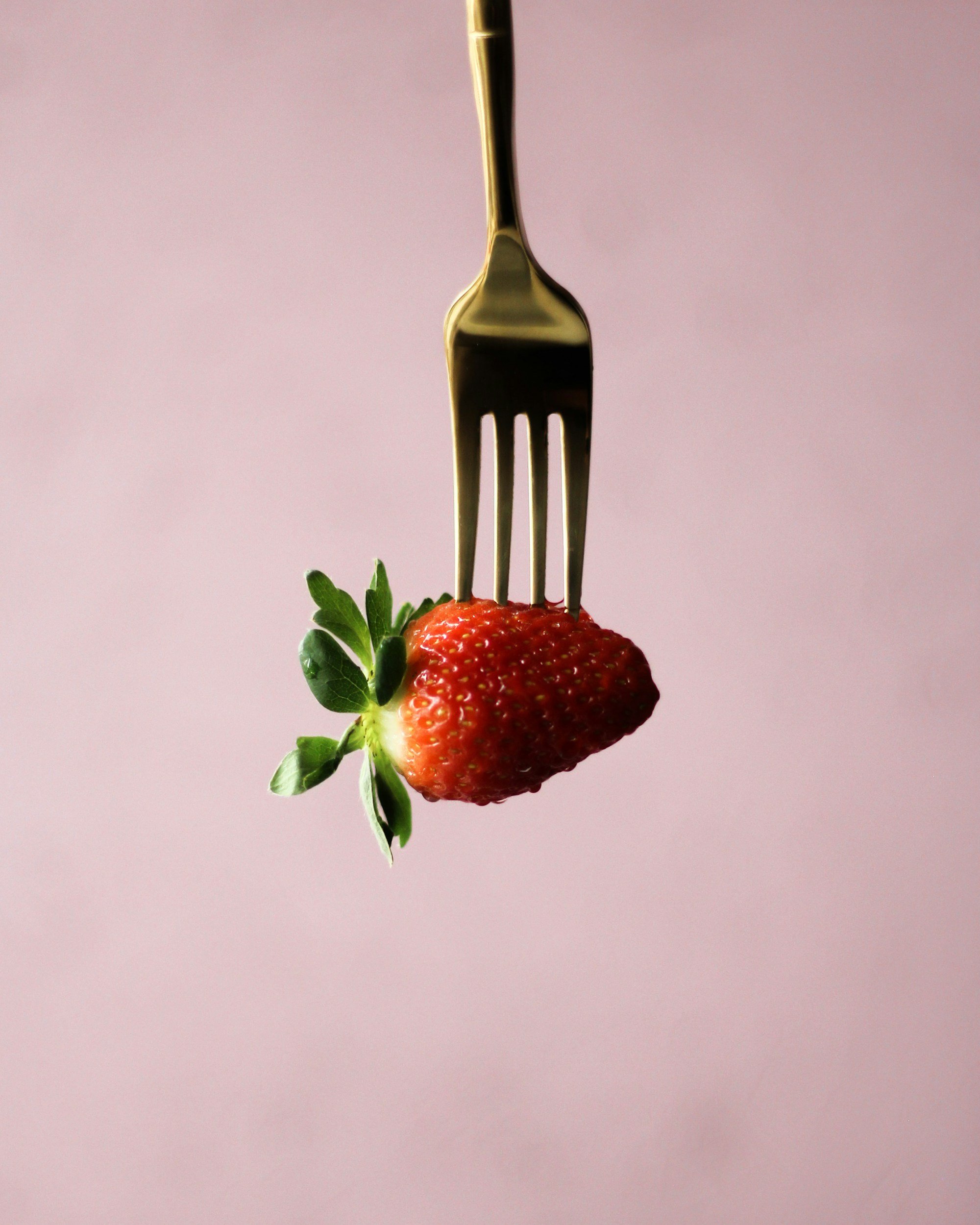
In this fruit series, we dive deep into the ancient origins of wild strawberries, how we’ve arrived at the modern strawberry, the global expansion and cultivation we see today alongside some fun facts and it’s nutritional power of course.
Strawberries are far more than a sweet seasonal favorite — they’re one of the most fascinating fruits in agricultural history, packed with antioxidants, linked to heart and brain health, and increasingly at the center of conversations around pesticides, sustainability, and organic farming.
From Wild Strawberry to Modern Cultivation
The strawberries we today are very different from the small wild strawberries that originally grew throughout Europe, Asia, and the Americas. Ancient Romans prized wild strawberries not only for their flavor but also for their medicinal uses, believing they could help with inflammation, digestive issues, and even melancholy. The strawberries people ate centuries ago looked very different from the large bright-red berries we know today. Wild strawberries were much smaller, intensely fragrant, and often sweeter. The modern garden strawberry actually emerged accidentally in the 1700s when European botanists crossed two species: the North American Virginia strawberry and a Chilean variety brought to Europe by explorers. The result was Fragaria × ananassa — the ancestor of nearly every commercial strawberry grown today.
Today, strawberries are one of the most cultivated fruits on Earth. They thrive in temperate climates and are grown commercially across North America, Europe, South America, and Asia. The United States is one of the largest producers globally, with California responsible for the vast majority of American strawberries. Despite their delicate appearance, strawberries are surprisingly complex to grow. They require careful climate control, disease management, and rapid harvesting because the fruit bruises and spoils easily. This fragility is one reason strawberries often receive intensive pesticide treatment in conventional farming systems. Modern cultivation has transformed strawberries into a year-round crop through greenhouse production, hydroponics, vertical farming, and advanced breeding techniques.
Nutritional Powerhouse in a Tiny Package
Strawberries are often categorized as a “superfood” for good reason. A single serving delivers an impressive nutritional profile while remaining low in calories. They are exceptionally rich in vitamin C, with one cup providing more than the recommended daily intake. Strawberries also contain manganese, folate, potassium, fiber, and powerful antioxidant compounds called anthocyanins — the pigments responsible for their vibrant red color. These antioxidants help combat oxidative stress in the body, which is associated with aging and chronic disease. Emerging research continues to connect strawberry consumption with improved cardiovascular health, better blood sugar regulation, reduced inflammation, and even cognitive support as we age. Recent studies have also explored how growing conditions affect strawberry nutrition. Researchers found that environmental factors like altitude and climate can significantly influence flavonoid content and antioxidant activity in strawberries, potentially affecting both flavor and health benefits.
A Controversial Fruit
For all their nutritional benefits, strawberries consistently rank among the fruits with the highest detectable pesticide residues in conventional agriculture. Because strawberries are highly susceptible to mold, insects, and fungal diseases, conventional farms often rely on repeated pesticide applications throughout the growing cycle. Their soft skin and porous surface make residues difficult to remove completely through washing alone. The Environmental Working Group’s annual “Dirty Dozen” list has repeatedly placed strawberries near the very top for pesticide contamination. Some analyses found pesticide residues present on over 99% of conventionally grown strawberry samples tested. More recently, growing concern has emerged around PFAS-based pesticides — often called “forever chemicals” because they persist in the environment and body for long periods of time. New investigations and laboratory analyses have raised alarms over PFAS residues appearing on conventional produce, including strawberries.
Why Choosing Organic Matters
While eating fruits and vegetables of any kind is overwhelmingly beneficial for health, strawberries are one fruit where choosing organic may make a particularly meaningful difference. Because strawberries have thin skins and are typically eaten whole without peeling, consumers are exposed directly to whatever residues remain on the fruit. Washing helps reduce some contaminants, but researchers note it cannot fully eliminate many pesticide traces embedded in the fruit’s surface. this matters because chronic low-level exposure to pesticides and environmental chemicals has increasingly been studied for its potential relationship to: hormone disruption, neurological health, oxidative stress, long-term inflammatory burden and much more.
That said, “organic” does not mean pesticide-free. Organic farming still permits certain naturally derived pesticides and approved treatments. However, the overall chemical load and synthetic pesticide exposure are typically far lower. For consumers trying to reduce long-term chemical exposure, strawberries are often considered one of the top fruits worth buying organic whenever possible.
Wrapping Up
Strawberries are much more than a sweet fruit. They are one of the most antioxidant-rich fruits available and offer meaningful benefits for cardiovascular, metabolic, cognitive, and overall inflammatory health. At the same time, they also highlight some of the larger conversations happening around modern agriculture, environmental exposure, and food quality. When possible, choosing organic strawberries is one of the simplest ways to reduce pesticide exposure while still benefiting from one of the most nutrient-dense fruits available.
Strawberry Fun Facts!
Strawberries are technically not true berries in botanical terms.
The average strawberry contains around 200 seeds on its outer surface.
Strawberries belong to the rose family.
Belgium has an entire museum dedicated to strawberries.
Ancient folklore claimed strawberries symbolized Venus, the Roman goddess of love.
Japan grows luxury strawberries that can sell for very high prices due to meticulous cultivation methods.
References
U.S. Department of Agriculture (USDA). Pesticide Data Program Annual Summary Reports.
https://www.ams.usda.gov/datasets/pdpEnvironmental Working Group (EWG). Shopper’s Guide to Pesticides in Produce (Dirty Dozen).
https://www.ewg.org/foodnews/Giampieri, F., Afrin, S., Forbes-Hernandez, T. Y., et al. (2016). Strawberry: A source of bioactive compounds for health promotion. Journal of Agricultural and Food Chemistry.
https://pubs.acs.org/doi/10.1021/acs.jafc.6b00857Battino, M., Giampieri, F., Forbes-Hernandez, T. Y. (2019). Strawberries and human health: Effects beyond antioxidants. Journal of Berry Research.
https://doi.org/10.3233/JBR-190399Aaby, K., et al. (2012). Phenolic compounds in strawberry (Fragaria × ananassa) and antioxidant activity. Journal of Agricultural and Food Chemistry.
https://pubs.acs.org/doi/10.1021/jf2035276Frontiers in Plant Science (2024). Environmental influences on strawberry phytochemicals and antioxidant capacity.
https://www.frontiersin.org/journals/plant-scienceU.S. National Library of Medicine (NIH / PubMed Central). Berry intake and cardiometabolic health review literature.
https://www.ncbi.nlm.nih.gov/pmc/U.S. Environmental Protection Agency (EPA). Overview of PFAS (“forever chemicals”) and environmental persistence.
https://www.epa.gov/pfas
